WordPress vs Shopify: Which Should You Choose in 2026?
By Imran Hosain · · 8 min read
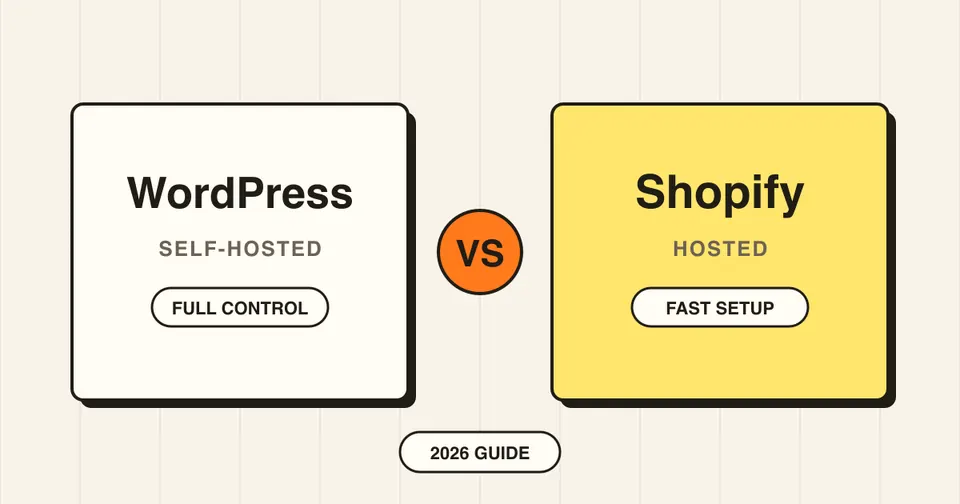
If you are starting an online business, or rebuilding one, you will hit this question early: WordPress or Shopify? Most small business owners I talk to are not asking which platform is "best". They want to know which one fits their budget, their skills and their plans for the next few years. I build websites and stores on both platforms, so I have no reason to push you toward either one. Here is a balanced comparison, with a table you can scan in a minute and the details behind it.
One note before we start: WordPress itself is a website platform, and online stores on WordPress usually run on WooCommerce, a free plugin. So when this guide says "WordPress", it means WordPress with WooCommerce for selling. If you only want the store-versus-store view, my Shopify vs WooCommerce guide goes deeper on that.
WordPress vs Shopify at a glance
| Factor | WordPress + WooCommerce | Shopify |
|---|---|---|
| Pricing | Hosting from about $3-5 a month. WooCommerce is free, but full functionality usually needs paid plugins and themes. Budget varies by project. | Basic about $29 a month (most popular), Grow about $79, Advanced about $299, Plus from about $2,300. |
| Ease of use | More technical setup, plus ongoing plugin and update maintenance. | Fast onboarding. No coding needed. |
| Customization | 60,000+ plugins and 14,000+ themes. Full creative control. | About 8,000 apps. More locked down, but all vetted and secure. |
| SEO | More advanced, granular control (for example through Yoast), but it needs more manual setup. | Handles the basics automatically, such as metadata and alt text. |
| Transaction fees | WooCommerce itself charges none. Cost depends on the payment gateway you choose (140+ available). | About 2.9% + $0.30 per transaction with Shopify Payments (lower on higher plans), or up to 2% extra with a third-party gateway. |
| Best for | Content-heavy sites, full design and functionality control, or avoiding platform transaction fees long-term. | Scaling an online store quickly with less technical overhead. |
Figures are from websitebuilderexpert.com (updated March 2026). Prices and fees change, so check each platform's current pricing before you decide.
Pricing: simple plans vs a flexible budget
Shopify's pricing is easy to read. The Basic plan is the most popular, and the higher plans (Grow, Advanced and Plus) add features and lower the payment processing rates. Plus, from about $2,300 a month, is aimed at large businesses. On top of the plan, most stores pay for a few apps.
WordPress is cheaper to start. Hosting begins around $3-5 a month, and WooCommerce costs nothing. But a store that does more than the basics usually needs paid plugins and a good theme, and many projects also need a developer. That is why a WordPress budget varies so much: a small store can stay inexpensive, while a complex one can cost more than a Shopify plan. Compare the total for your exact needs, not the headline number.
Ease of use: Shopify is faster to start
Here Shopify clearly wins. Onboarding is quick, you do not need to code, and you can have a working store in days. WordPress with WooCommerce takes more technical setup, and afterwards someone has to keep plugins and updates under control. It is not hard if you know WordPress, but it is real ongoing work, which is why I offer care plans for WordPress sites.
Customization: control vs a curated ecosystem
WordPress has more than 60,000 plugins and over 14,000 themes, and because you control the code you can build almost anything. Shopify has around 8,000 apps. It is more locked down, but the apps are vetted, which means fewer surprises with quality and security. If your idea is standard, Shopify's limits will rarely get in your way. If your idea is unusual, WordPress gives you room that Shopify does not.
SEO: automatic basics vs granular control
Shopify handles the basics for you, including metadata and image alt text, so a new store starts with a sound foundation. WordPress gives more advanced and granular control, for example through an SEO plugin like Yoast, but you have to set it up yourself. Both can rank well. Content quality, page speed and a clean structure matter more than the platform you pick.
Transaction fees: the cost that grows with sales
Shopify charges about 2.9% plus $0.30 per transaction when you use Shopify Payments, with lower rates on higher plans. If you use a third-party payment gateway instead, Shopify can add up to 2% on top. WooCommerce itself charges no transaction fees. What you pay depends on the payment gateway you choose, and there are more than 140 to pick from. For a store with high sales volume, this difference adds up over the years.
Choose WordPress + WooCommerce if...
- Your site is mostly content (articles, guides, services) and the store is only one part of it.
- You need full control over design and functionality, such as custom product types, pricing rules or booking flows.
- You want to avoid platform transaction fees in the long run and pick your own payment gateway.
- You are comfortable with more setup, or you have a developer to handle it and keep the site updated.
Choose Shopify if...
- The online store is the business, and you want to launch and scale quickly.
- You do not want to manage hosting, plugin updates or technical maintenance.
- You prefer a predictable monthly plan and vetted apps over open-ended flexibility.
- You or your team have no coding skills and want a clean admin that works from day one.

My honest take
I build on both, and neither is better in every case. When someone sells products and wants to focus on marketing instead of maintenance, I usually point them to Shopify. When the site needs to be more than a store, or the business has requirements that a hosted platform handles awkwardly, I usually point them to WordPress and WooCommerce. The wrong choice is not usually a disaster, but it costs time, so it is worth deciding on purpose.
If you already know which way you lean, you can read about my WordPress development and Shopify development services. If you are still unsure, send me your project details and I will give you a straight recommendation.
Frequently asked questions
Yes. Products, customers and content can usually be exported from Shopify and imported into WordPress with WooCommerce. The design has to be rebuilt, and you should set up redirects from your old URLs so you keep your search rankings. It is easier if you plan the move before your store gets large.
It depends on your store. Shopify plans start at about $29 a month, plus apps and transaction fees (about 2.9% + $0.30 with Shopify Payments). WordPress hosting can start around $3-5 a month and WooCommerce has no transaction fees, but you pay for plugins, themes and developer time. For a small store, the two can cost a similar amount. For high sales volume, avoiding platform transaction fees can make WordPress cheaper over time.
Both can rank well. Shopify handles basic SEO automatically, including metadata and alt text. WordPress gives more advanced and granular control, for example with Yoast, but needs more manual setup. Good content, fast pages and a clean structure matter more than the platform.
Not for Shopify. It is built for fast onboarding without code. WordPress with WooCommerce needs more technical setup and ongoing plugin and update maintenance, so many owners hire a developer to set it up and keep it healthy. You can still manage content yourself on either platform.
WordPress is the website platform. WooCommerce is a free plugin that adds online store features to WordPress, such as products, cart and checkout. When people compare WordPress with Shopify for selling online, they usually mean WordPress with WooCommerce.